Purpose
- MD-26 is the application form used to seek permission from the Central Licensing Authority (CLA) to import or manufacture a new medical device in India.
- “New” means a medical device that does not have a predicate device (a similar, existing device) in the Indian market.
When is MD-26 Used?
- Importing New Medical Devices: Companies seeking to import a medical device that lacks a predicate device in India must file the MD-26.
- Manufacturing New Medical Devices: Manufacturers in India developing a new medical device (without a predicate) also use the MD-26.
Key Sections of the MD-26 Form
The exact structure of the form may evolve, so always refer to the latest version on the CDSCO’s Sugam portal. Here’s a general outline of information it includes:
- Applicant Details:
- Company name, address, contact information.
- Manufacturing license details (if applicable).
- Device Information:
- Classification of the device (Class A, B, C, or D).
- Generic name and intended use of the device.
- Trade name or brand name of the device.
- Details of the manufacturer (country of origin, manufacturer’s address, legal manufacturer)
- Technical Specifications:
- Detailed description of the device.
- Composition and materials used
- Manufacturing process.
- Standards and testing information (e.g., ISO, IEC, BIS)
- Risk analysis report.
- Supporting Documentation:
- Performance evaluation reports and test reports (biocompatibility, stability, etc.).
- Clinical investigation report (if applicable).
- Labeling and user manual drafts.
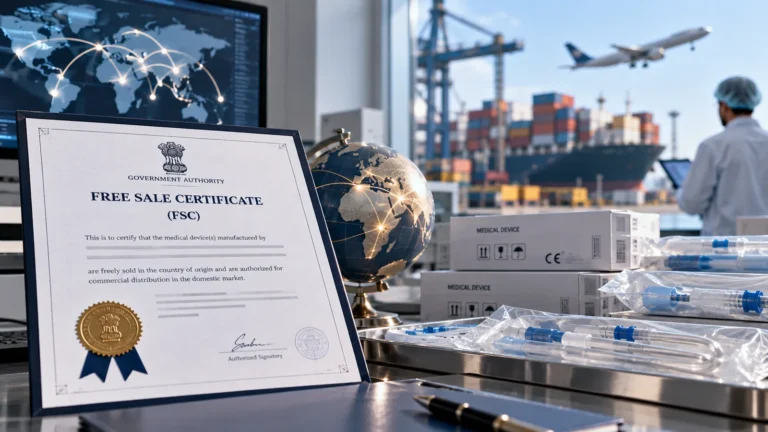
- Free Sale Certificate or equivalent from the country of origin.
- Other required declarations depending on the nature of your product.
- Fees and Payment: Refer to the CDSCO fee structure.
Submission Process
- Sugam Portal: The form is filed through the Sugam online portal (https://cdscomdonline.gov.in). You’ll need to register an account.
- Supporting Documents: Prepare all documents meticulously. Clarity and organization expedite review.
Important Considerations
- Complex Process: Filling out the MD-26 form and gathering supporting documents can be an intricate process. Incorrect or incomplete information can lead to delays or rejection.
- Regulatory Consultant: For complex devices or if you’re new to the process, it’s highly advisable to engage a regulatory consultant who specializes in the Indian medical device market. They can significantly streamline the process.
- Official Resources: Always refer to the latest MD-26 form and guidance document on the CDSCO website (https://cdsco.gov.in/).
Understanding MD-27 Permission
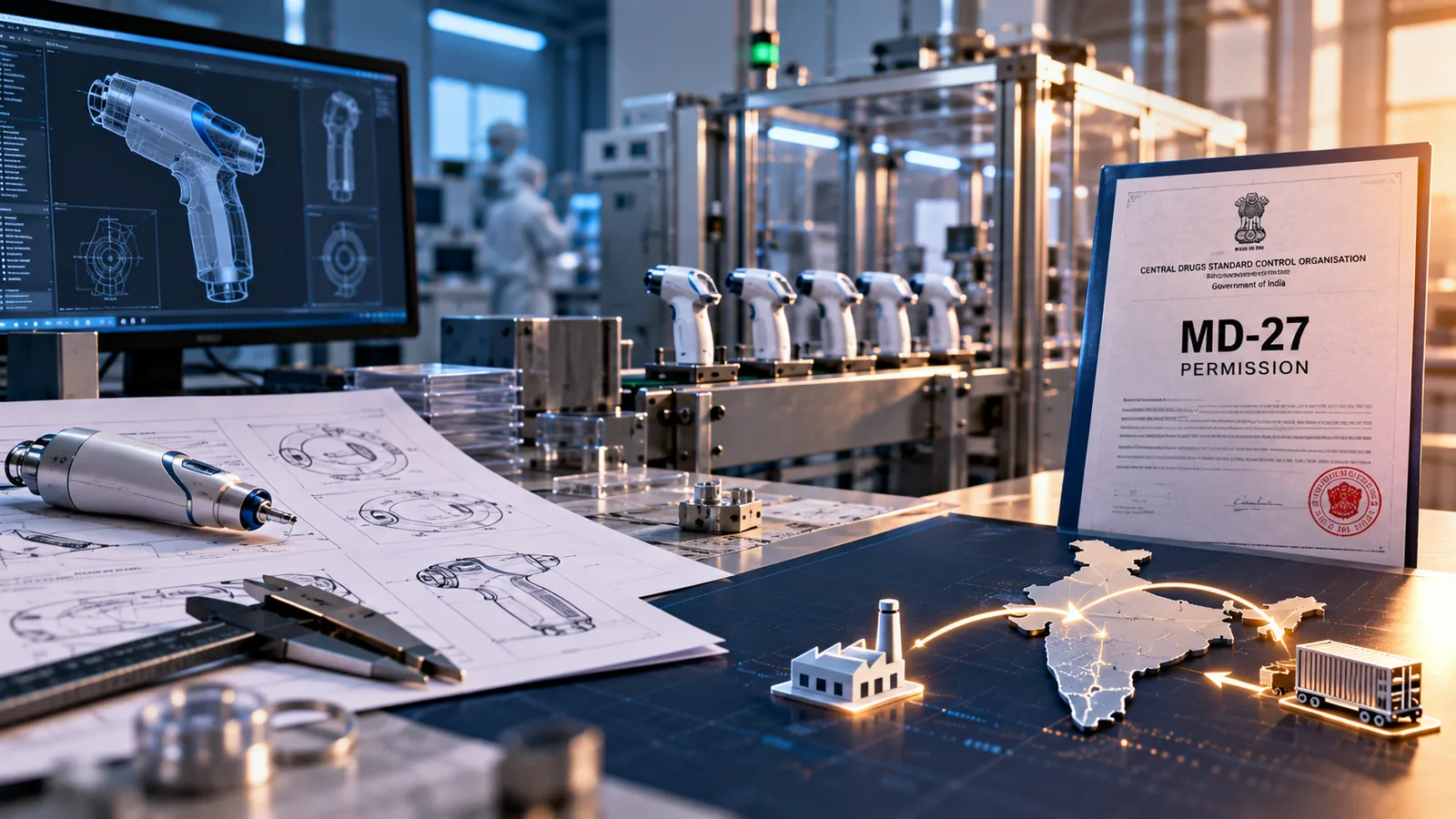
- What it is: MD-27 is permission from the Central Licensing Authority (CLA) to import or manufacture a new medical device in India, meaning one that doesn’t have a predicate device available in the Indian market.
- Significance: It’s a critical step, often one of the first for bringing innovative medical devices into India.
Steps & Considerations
1. Pre-Application Preparation
- Understand your device:
- Thoroughly understand its classification (according to the Indian Medical Device Rules 2017) and potential risk category (Class A, B, C, or D).
- Higher risk class means more stringent requirements.
- Assess Novelty: Conduct a detailed search for predicate devices within the Indian market. A qualified regulatory consultant can help with this.
- No existing predicate device strengthens the case for the MD-27 pathway.
- Technical Documentation: Begin gathering and compiling comprehensive technical specifications, materials and manufacturing information, performance evaluation data, pre-clinical data, and, if relevant, any clinical data.
2. Clinical Investigation (If Required)
- Determination: Depending on your device’s risk profile, the CLA may mandate conducting a clinical investigation in India as part of the MD-27 application.
- Protocol & Approval: A detailed clinical investigation protocol must be designed and submitted for approval. (Form MD-22 is typically used)
- Ethics Committee: The investigation needs ethics committee approval.
- Data Compilation: Upon completion of the investigation, meticulous data collection, analysis, and a clinical investigation report must be generated.
3. MD-27 Application Preparation
- Sugam Online Portal: The CDSCO has streamlined this process through its Sugam online portal (https://cdscomdonline.gov.in). You’ll need to register and create an account.
- Form MD-26: Your application starts with Form MD-26. The level of detail required in this form is significant.
- Key Documents:
- Technical file with specifications, manufacturing processes, performance data.
- Detailed risk analysis of the device
- Test reports (biocompatibility, sterility, etc.)
- Clinical investigation report (if required)
- Labeling and user manual drafts
- Undertakings/Legal Declarations (vary depending on your situation)
- Fees: Review the CDSCO fee structure for the MD-27 process. Budget accordingly.
4. Application Submission & Review
- Form Submission: Meticulously review your application before submitting it with all supporting documents through the Sugam portal.
- Evaluation: The CLA will conduct a thorough review of your application. This can be a time-consuming process.
- Be prepared to answer additional queries and potentially provide further data or clarifications as needed.
5. Decision & MD-27 Issuance
- Approval: If the CLA is satisfied with the safety and performance demonstrated, it will issue the MD-27 permission.
- Rejection: If major gaps or deficiencies are found, the application may be rejected. You might have opportunities to address these points and re-apply.
Additional Considerations
- Complexity: The process complexity increases with the risk classification of your device.
- Timelines: CLA review times can vary, and the MD-27 process generally takes several months. Anticipate potential delays.
- Guidance: The CDSCO website has valuable resources, but their information can be complex.
Important Notes:
- Regulatory Consultants: Engaging a qualified regulatory consultant specializing in Indian medical device regulation is highly advisable. Their expertise can save you time and increase your success rate.
- Constant Updates: Regulations change. Stay updated with the latest information directly from the CDSCO website.
Free downloadCDSCO Registration Checklist 2026Licence route, Device and Plant Master File items and import documents in one checklist.
Get the free checklistMedfins International regulatory team, led by Arunkumar Chokkalingam, Managing Director and CQI & IRCA certified ISO 13485 Lead Auditor. Last updated: . Questions about your device? Talk to our team.