Introduction
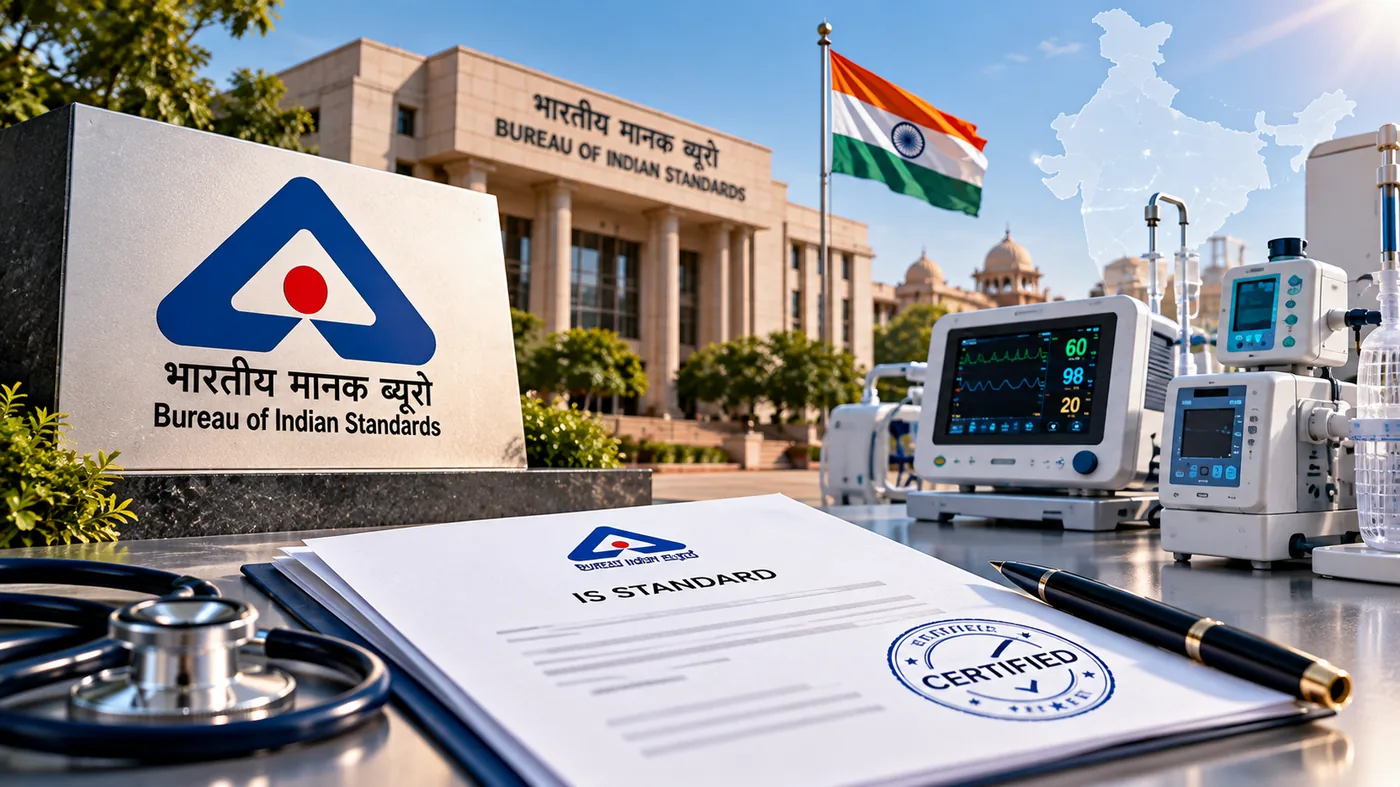
India’s medical device industry is rapidly evolving, with increasing regulatory focus on quality, safety, and standardization. One of the key regulatory frameworks ensuring product quality is the BIS (Bureau of Indian Standards) certification, commonly known as the ISI Mark.
If you are a manufacturer, importer, or distributor of medical devices, understanding BIS requirements is crucial—not only for compliance but also for building trust and expanding your market presence in India.
What is BIS?
-
BIS (Bureau of Indian Standards) is the national standards body of India, established under the BIS Act, 2016.
It is responsible for:
- Standardization of products
- Quality certification
- Consumer safety assurance
The ISI Mark issued by BIS signifies that a product complies with Indian standards (IS).
Why is BIS Important for Medical Devices?
Medical devices directly impact patient safety. BIS ensures:
- ️ Product safety and reliability
- ️ Compliance with Indian quality standards
- ️ Reduction in substandard or counterfeit products
- ️ Market credibility and trust
- ️ Regulatory alignment with Indian authorities
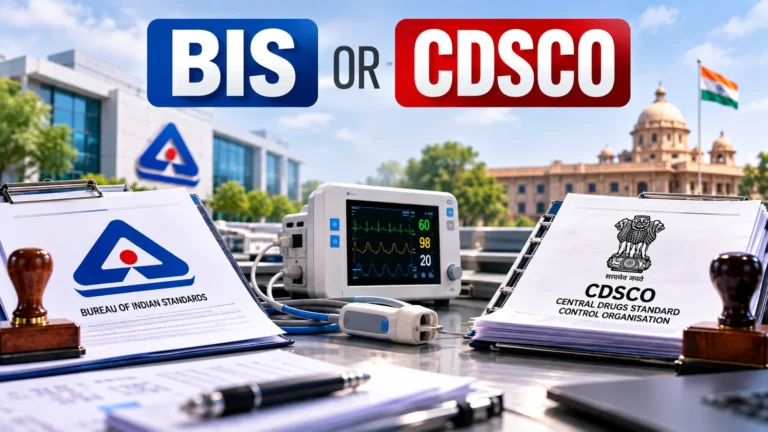
For high-risk or electrical medical devices, BIS plays a critical role alongside CDSCO regulations.
Is BIS Mandatory for Medical Devices?
- Not all medical devices require BIS certification (yet)
- BUT certain categories are mandatory under Compulsory Registration Scheme (CRS)
Mandatory BIS Categories (Examples)
- Electrical and electronic medical equipment (in some cases)
- Devices covered under notified IS standards
- Products falling under electronics safety (CRS)
The Indian government is gradually expanding BIS coverage, especially for:
- Patient monitoring devices
- Imaging systems
- Electronic diagnostic equipment
Trend Insight (2026):
BIS is expected to become more strict and widespread in the coming years.
How to Get BIS (ISI Mark) Certification for Medical Devices?
The process depends on whether the product falls under:
- ISI Mark Scheme (Scheme-I) OR
- CRS Registration (Scheme-II)
Step-by-Step Process
1.Identify Applicable Standard (IS Code)
- Example: IS/IEC standards for electrical safety
2.Product Testing
- Testing must be done in a BIS-recognized laboratory
3.Application Submission
- Submit application through BIS portal
4.Factory Inspection (for ISI Mark)
- BIS officials audit manufacturing facility
5.Sample Evaluation
- Product samples verified against standards
6.Grant of License / Registration
- ISI Mark or CRS Registration issued
Documents Required for BIS Certification
Here is a complete checklist:
Company Documents
- Business registration certificate
- Manufacturing license / Import license
- ISO 13485 certificate (recommended)
- Factory layout
Product Documents
- Product technical specifications
- Bill of materials (BOM)
- Circuit diagrams (for electrical devices)
- User manual
Testing Documents
- Test reports from BIS-approved lab
Benefits of BIS Certification
Business Advantages
- Legal market access (for mandatory categories)
- Increased brand credibility
- Competitive advantage in tenders
- Improved product quality
Strategic Advantages
- Easier entry into government procurement
- Alignment with Indian regulations
- Reduced product rejection risks
Is BIS Equal to CE Marking or US FDA?
No — they are NOT the same
|
Certification |
Region |
Purpose |
|---|---|---|
|
BIS |
India |
Quality & safety compliance |
|
Europe |
Market access & safety |
|
|
USA |
Regulatory approval for medical use |
Key Differences
- BIS → Product standard compliance
- CE → Risk-based conformity assessment
- US FDA → Clinical safety & effectiveness
However, having CE or FDA can support BIS approval indirectly, but does NOT replace it.
Is It the Right Time to Apply for BIS?
Yes — and here’s why:
- Indian government is tightening regulations
- BIS coverage is expanding rapidly
- Early compliance gives first-mover advantage
- Helps in tender eligibility and OEM partnerships
Strategic Insight for Medfins Clients
If you are:
- Importing medical devices
- Manufacturing electronics-based equipment
- Planning large-scale distribution
Start BIS readiness NOW instead of waiting for mandatory notification.
Conclusion
BIS certification is no longer just a regulatory requirement—it is a strategic business enabler in India’s growing medical device market.
With increasing government focus on quality and patient safety, companies that proactively adopt BIS standards will gain a strong competitive edge.